Chapter 5. HUNTING & GATHERING SOCIETIES
1. INTRODUCTION
Information on hunting & gathering
(H&G) societies comes from 2 sources:
-
archeology: studies H&G
societies of the distant past
-
ethnography: studies H&G
societies of the present & recent past (about 170 have been described)
Do the 2 sources paint the same
picture?
Consensus of researchers is that
modern and prehistoric people are analogous in most respect, except that:
-
modern H&G societies have often
been in contact with more advanced societies and have acquired modern artifacts
(EX: steel knives)
-
modern H&G societies have been
excluded from the more desirable (productive) regions of the world and
forced into marginal habitats (jungle, desert)
2. H&G SOCIETIES PRIOR
TO 100,000 BC
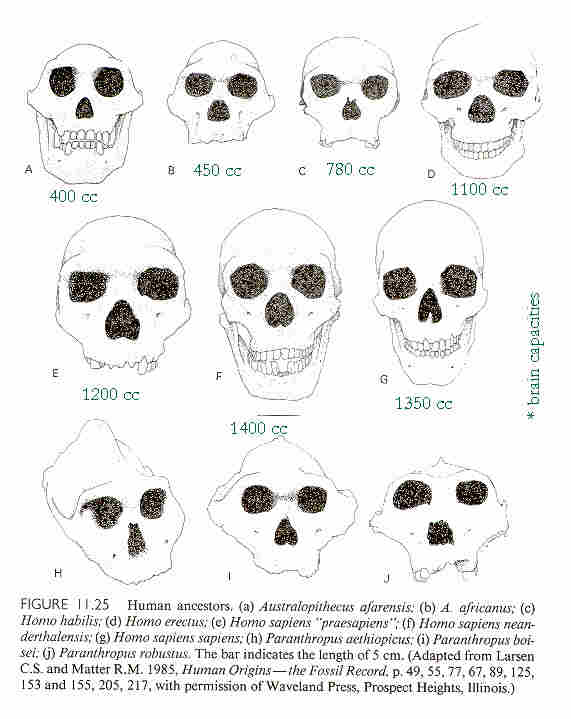
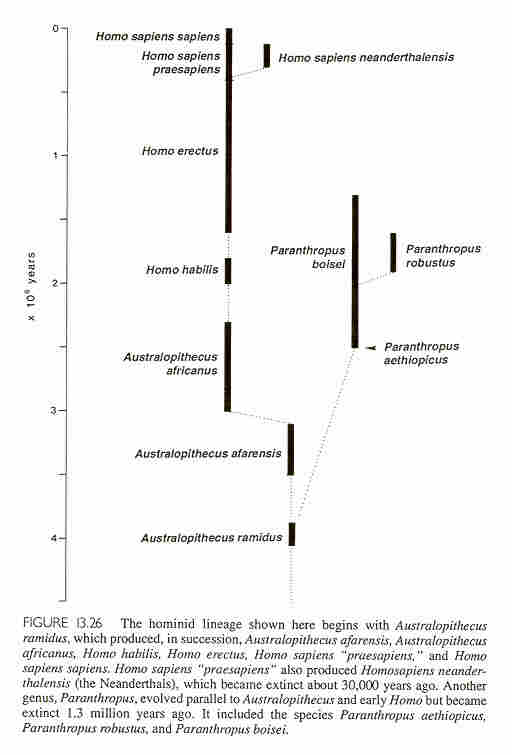
The bulk of human biological
evolution occurred prior to 100,000 BC. Humans are adapted to a H&G
lifestyle. This lifestyle is called the EEA (Environment of
Early Adaptation)
Biological changes during human
evolution often took place in coevolution with cultural change.
They include:
-
upright stance
-
sexual division of labor (women
gather, men hunt)
-
durable pair bond between man and
woman
-
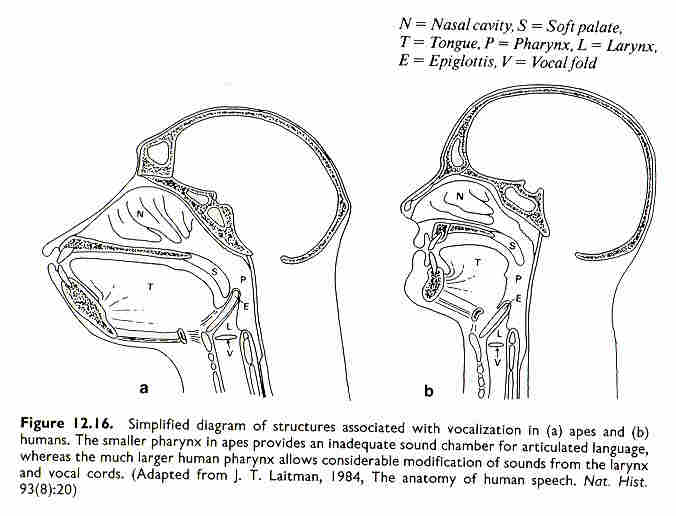
big game hunting puts a premium
on cooperation and communication, leading to evolution of language
-
control of fire (ca. 400K years
BP) affects evolution of teeth, jaws & face (this is an example of
coevolution)
-
burial of the dead with ochre (a
clue to belief in life after death?)
3. H&G SOCIETIES FROM
100,000 BC TO 7,000 BC
The official name of our species
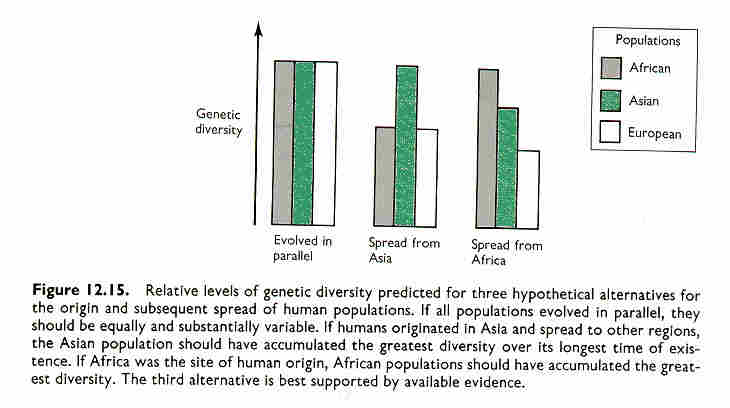
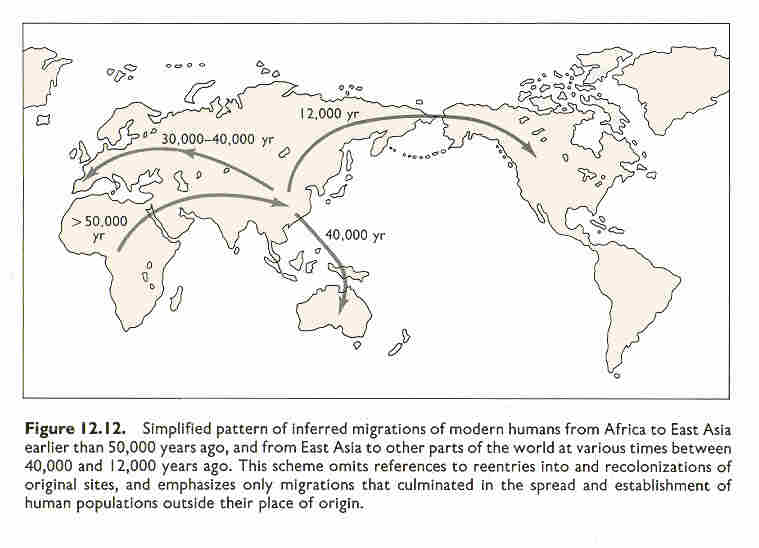
is homo sapiens sapiens. According to current theory, it is during
this period modern humans leave Africa to settle the rest of the world
(the Noah's Ark or Garden of Eden hypothesis). These population
movements lead to the evolution of today's human groups (i.e., races).
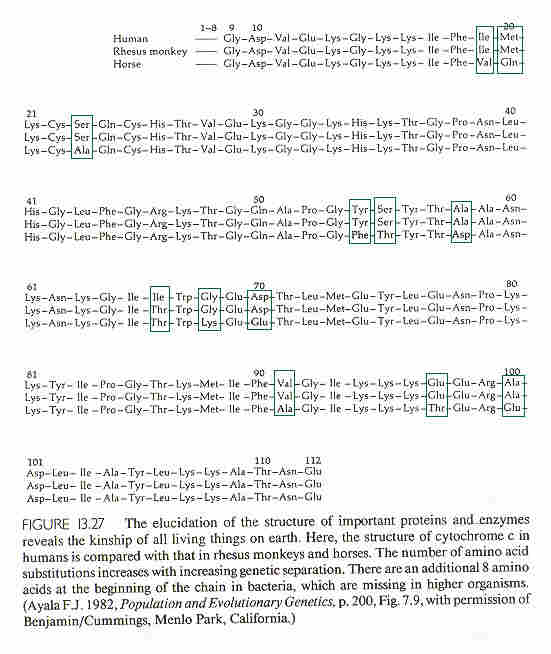
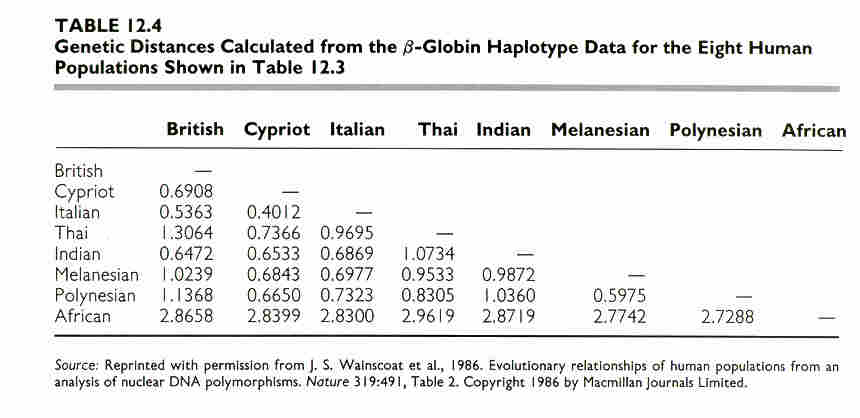
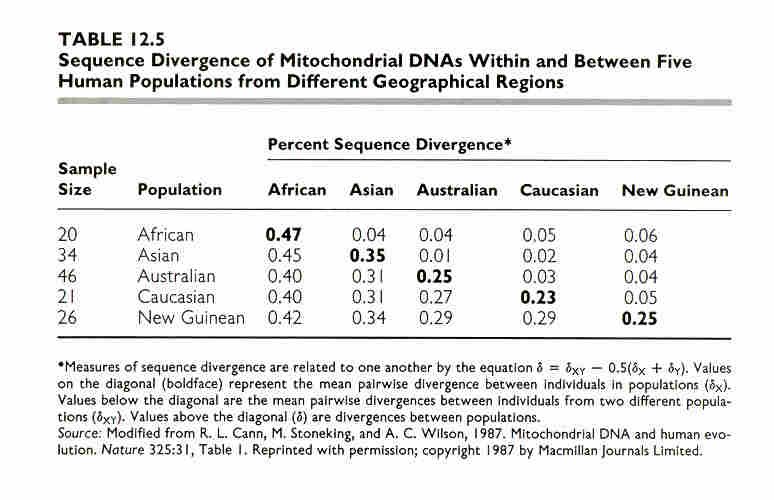
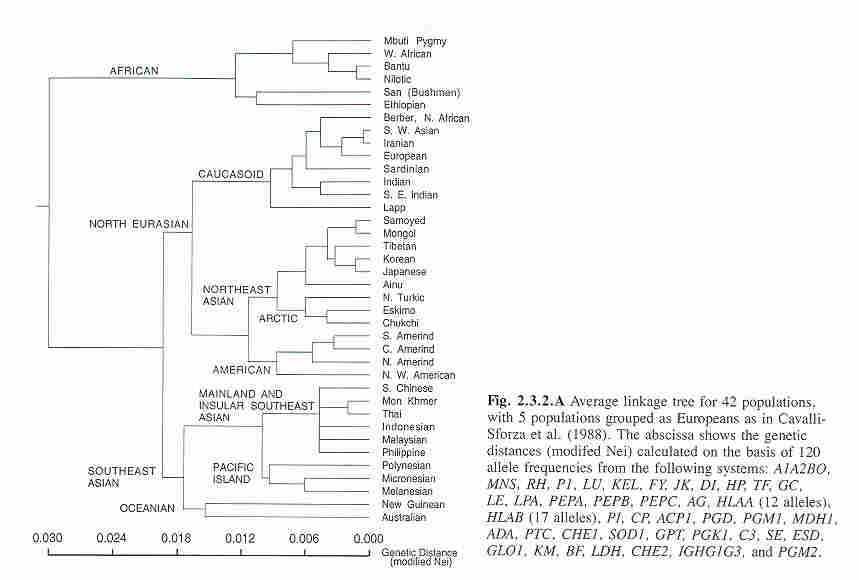
Chemical differences in proteins
and enzymes provides a measure of genetic distance between species.
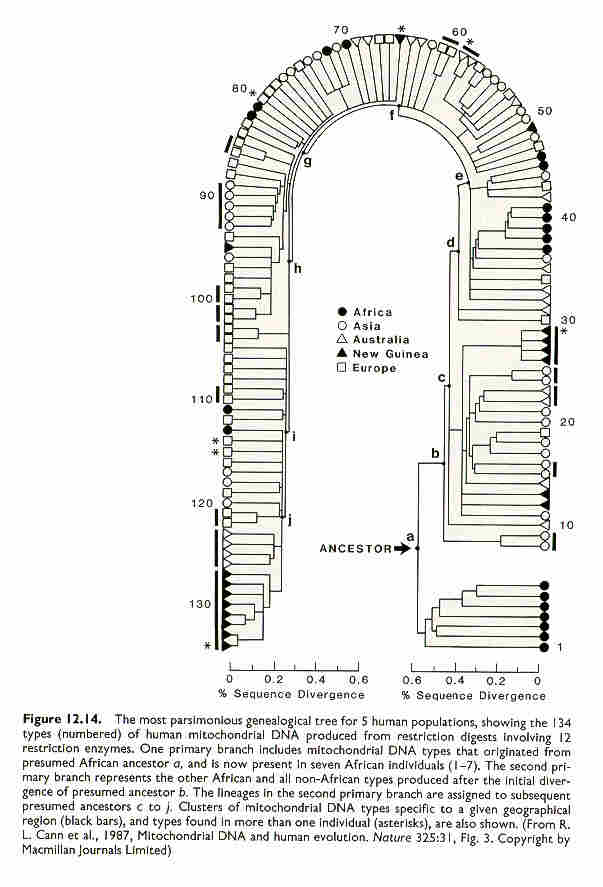
It is possible to reconstruct a
hypothetical genealogical tree of human populations from sequence divergences
in mitochondrial DNA.
And to infer the historical pattern
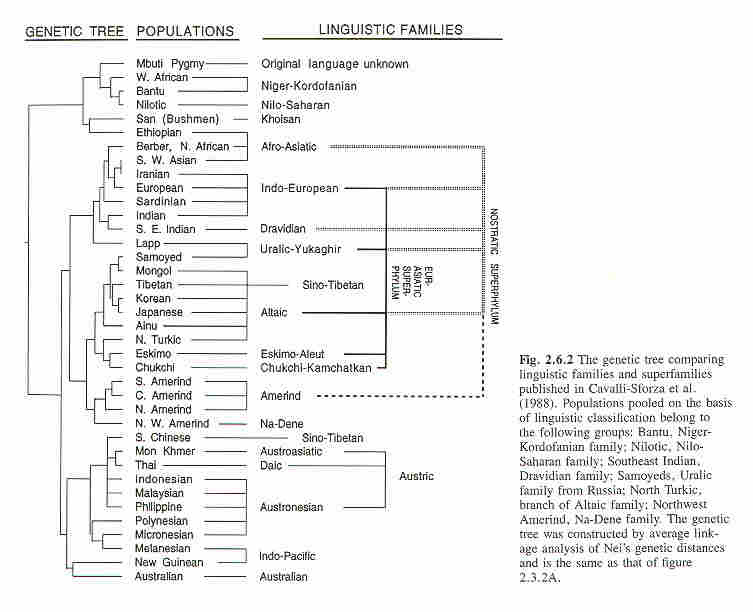
of spread of humans from Africa. Recent research (by Cavalli-Sforza
and colleagues) finds amazing similarities between population groupings
based on genetic similarity and groupings based on linguistic families
and superfamilies.
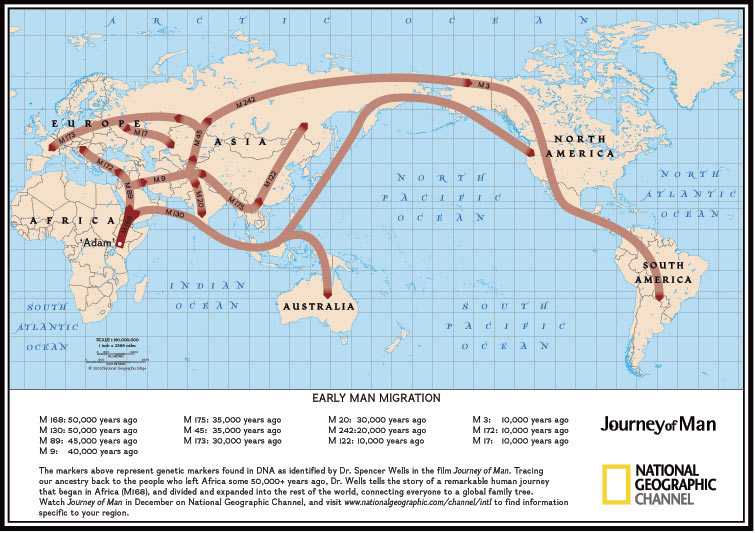
Current research on the Y chromosome
also provide clues about the pattern of migration of human groups from
Africa, as shown in the next exhibit.
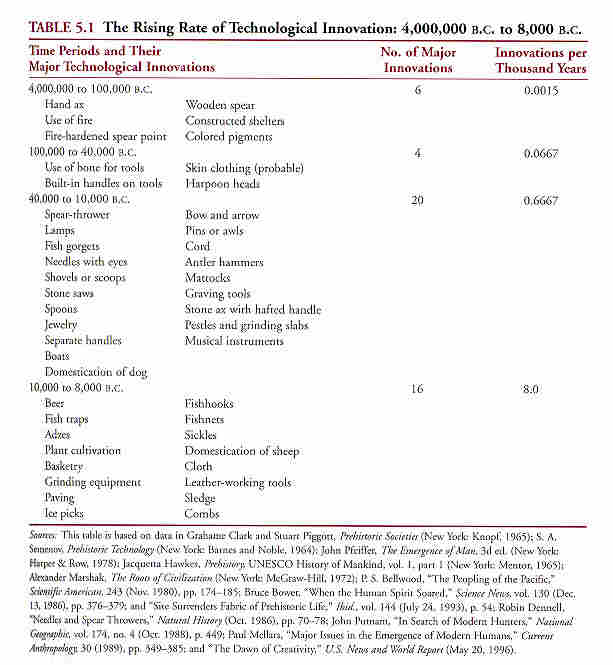
At some point during the last 100K
years, cultural evolution replaced biological evolution as the primary
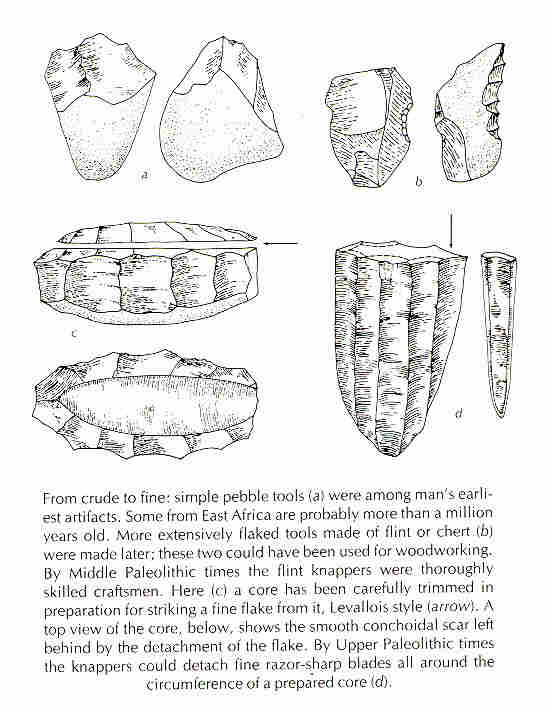
mechanism of adaptation & change in human societies. The rising rate
of technological innovation may have been associated with the appearance
of language.
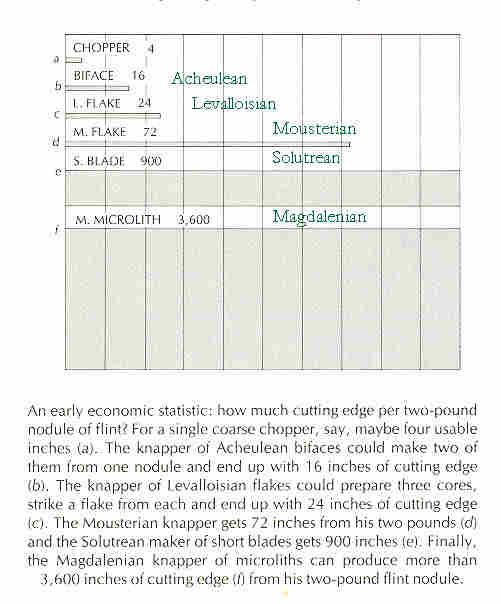
NOTE: do you know what is a
mattock,
an awl, an adz?
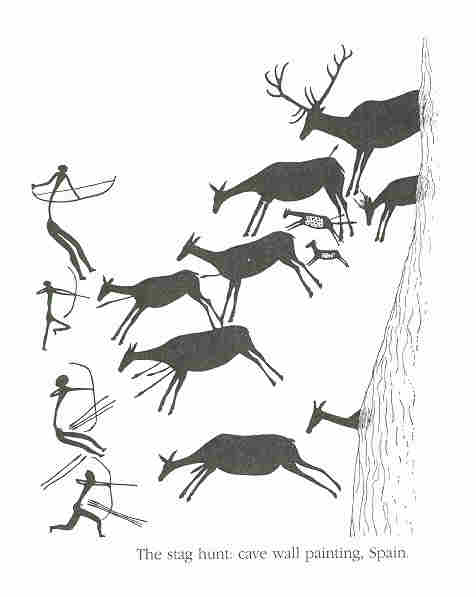
Art also appeared during this period.
4. H&G SOCIETIES OF THE
RECENT PAST
H&G societies of the recent
past exhibit many common features.
1. Population
-
average size is 40 people
-
population density is low
-
population size is stable because
of long period of nursing (making ovulation less likely) + widespread practice
of abortion & infanticide
-
nomadism
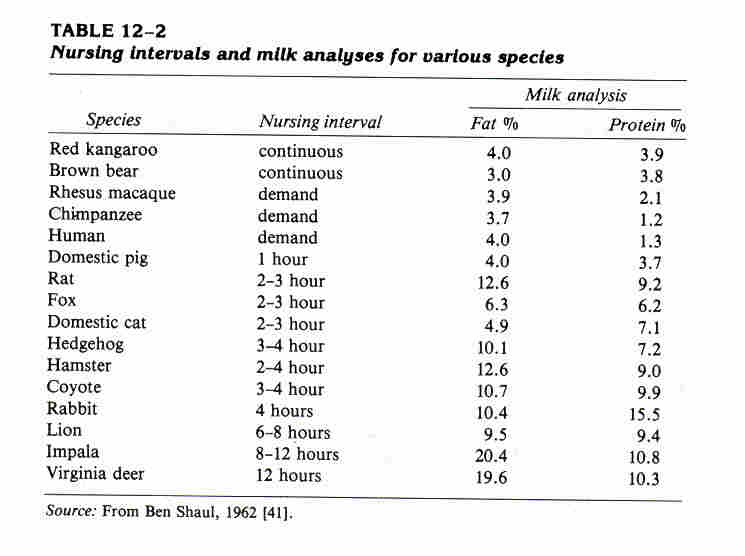
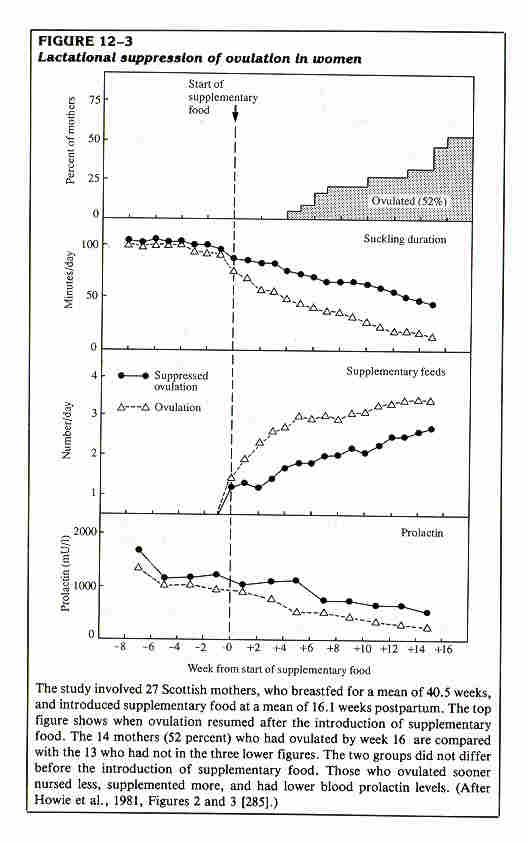
The following exhibits document
the human pattern of frequent (on demand) nursing, and the effect of nursing
on reducing the likelihood of pregnancy.
2. Kinship
-
kinship is the basic organizing
principle and has a multiplicity of functions
-
both nuclear and extended
families are recognized
-
polygyny is widespread (90% of H&G
societies allow it)
-
rules of exogamy prescribe
marriage outside the group, producing a web of kinship ties
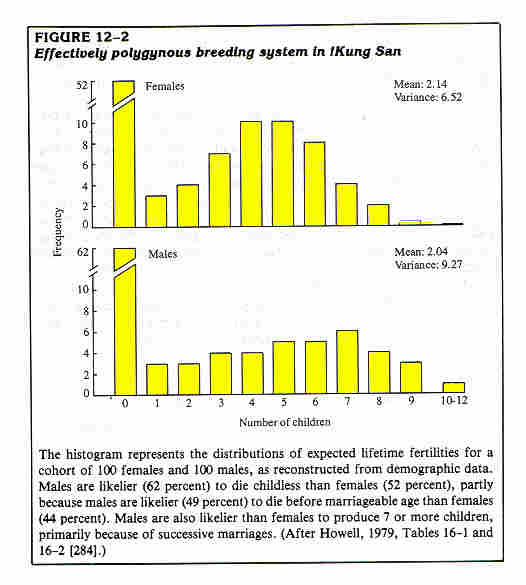
The following exhibit shows the
prevalence of polygyny in a typical hunting & gathering society.
3. Economy
-
nomadism ==> no accumulation
of possessions
-
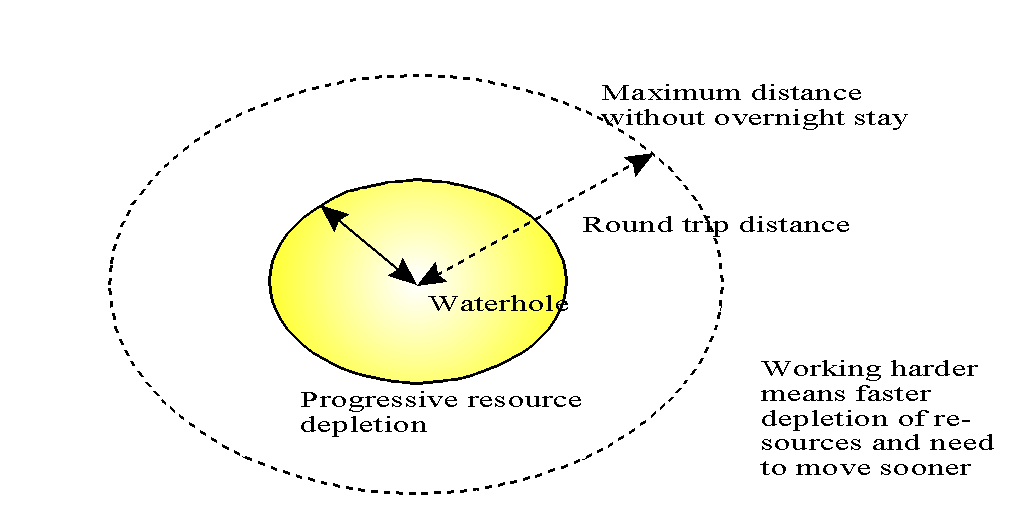
Are foragers "the
most leisured people in the world"? In !Kung, distance from the water
hole is a greater constraint on "production" than additional work.
-
division of labor is minimal,
based on sex and age
4. Polity
-
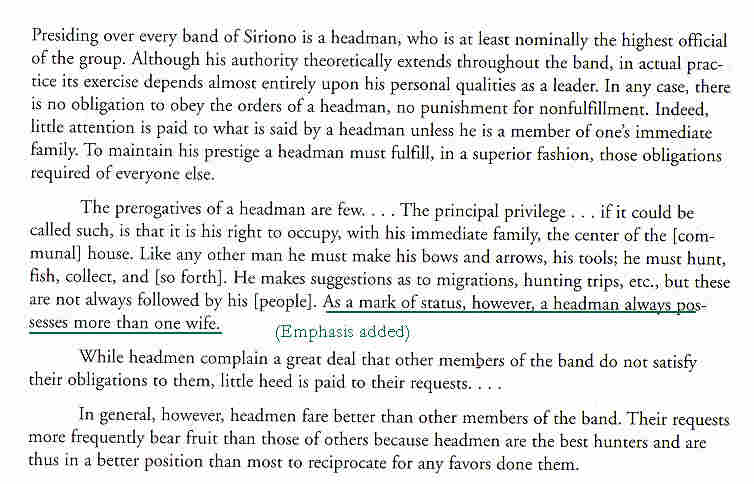
headman has limited authority
Note in the following description how position
as headman typically entails multiple wives and therefore greater reproductive
success.
5. Stratification
-
minimal inequality in power
& privilege
-
inequality in prestige based on
personal qualities of individuals
-
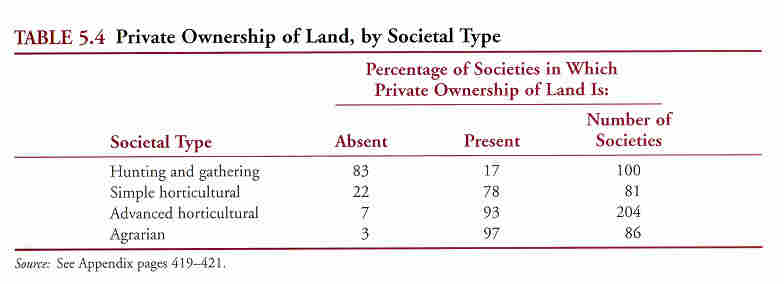
land is usually not owned privately
(Why?)
6. Religion
-
religious beliefs typically consist
of animism (spirits inhabit everything)
-
religious rites and magic are performed
by the medicine man or shaman
7. Education
-
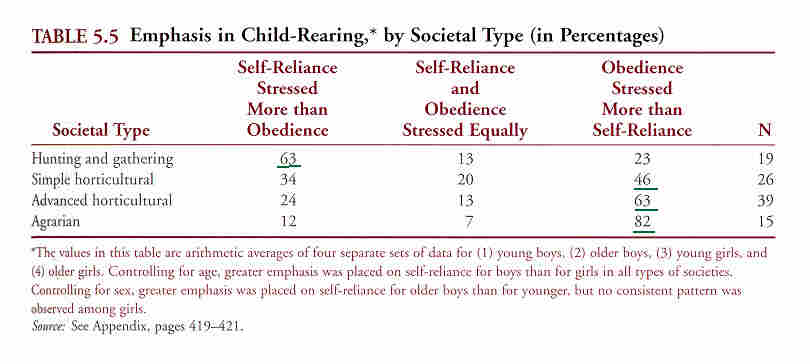
socialization is an informal process
-
there is an emphasis on independence
& self-reliance, rather than obedience
8. Arts & Leisure
-
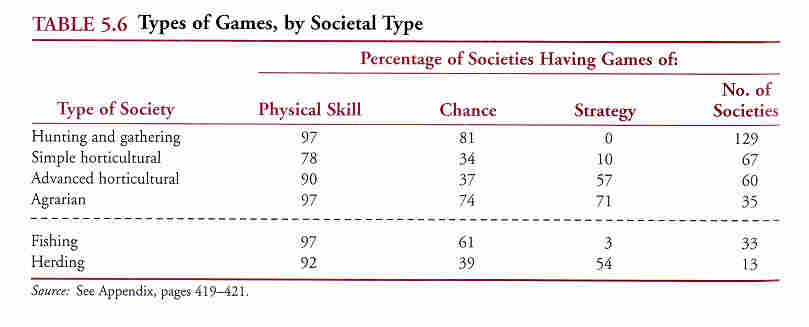
H&G societies play games of
chance,
but not of strategy (Why?)
9. Tribal Links
-
tribe = cultural unit (basis
for distinctive language & culture)
-
tribe formed by process of societal
fission
-
tribe is usually not politically
organized, but significant as a potential political unit (EX: American
Indians uniting against European expansion in the West)
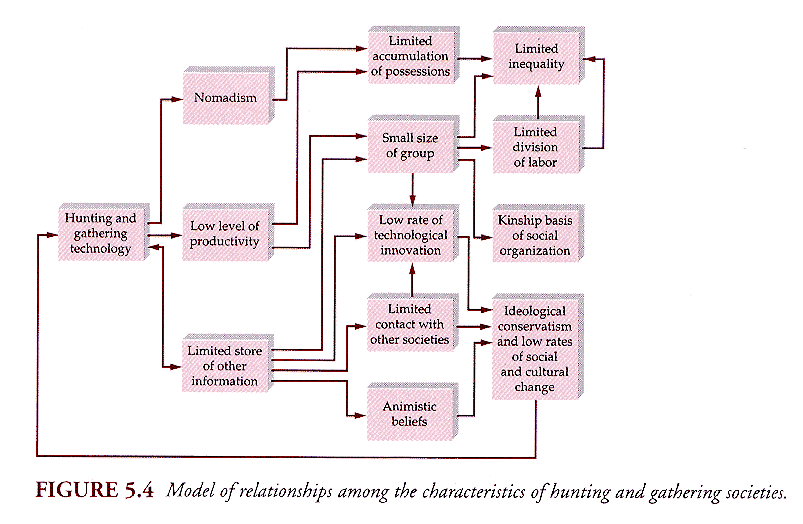
10. Relationships among Characteristics
of H&G Societies
Causal relationships among many
common characteristics of H&G societies are depicted in the next figure
by arrows. H&G Technology is presented as the primary
cause of other characteristics of H&G societies.
First version 11 December 1998;
last modified 28 Sep 2004